The ice crack across Lake Erie is so large that it can be seen from space
Lake Erie has only frozen completely three times in modern history — most recently 30 years ago
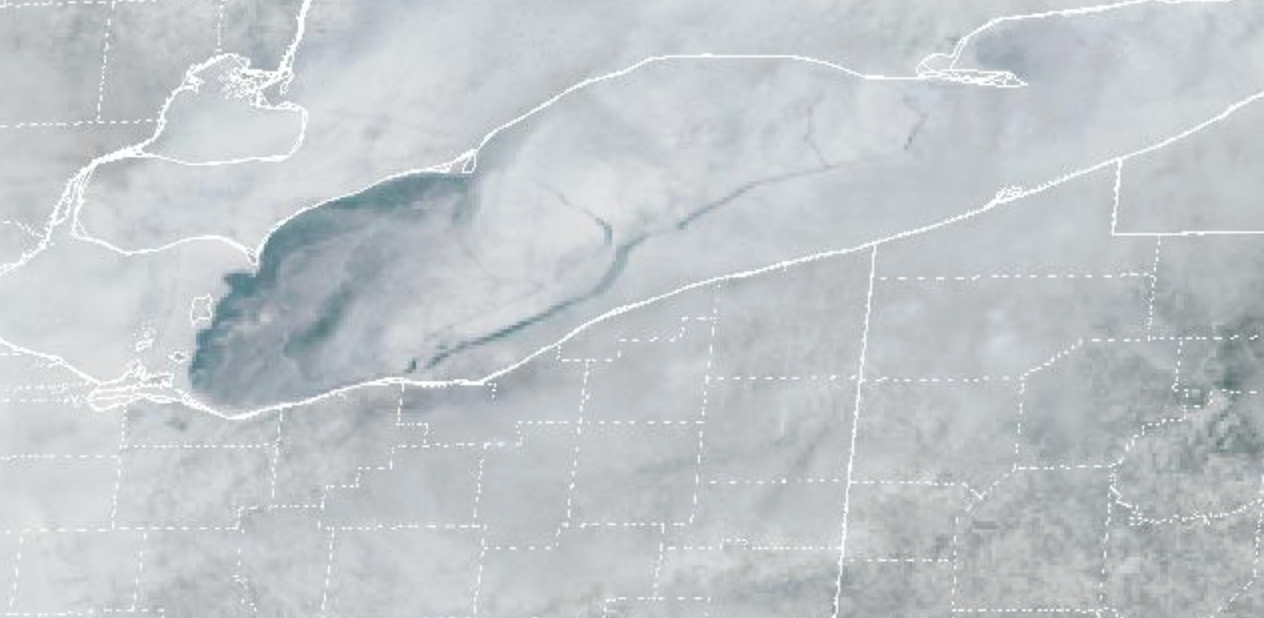
A crack that formed on the frozen Lake Erie this weekend is so large it can be seen from space.
The massive crack likely formed from strong northerly winds that pushed the ice south on Saturday, causing pressure to build and the ice to weaken on the Great Lake, 10 WBNS reported.
Throughout Saturday, the crack continued to grow, eventually expanding more than 80 miles.
The crack could be seen from Port Burwell on the north shore of Lake Erie in Canada, all the way to Cleveland, Ohio, which sits on the lake’s south shore, according to the report.
Satellite images revealed the massive crack, stretching across one of North America’s largest lakes.
“This serves as a good reminder that ice is never 100 percent safe. Even if the ice is thick, there can still be some thin spots, or weakening of the ice, leading to cracking,” 10 WBNS meteorologist Aaron White said.
About 95 percent of Lake Erie is currently frozen, according to data from NOAA’s Great Lakes Environmental Research Laboratory. However, the crack may expand further within the coming days as temperatures rise.
Lake Erie has only completely frozen over three times in modern history, most recently in February of 1996, according to Cleveland.com.
During an average winter, the lake peaks between 65 and 70 percent ice coverage. In recent years, Lake Erie has approached full ice coverage several times, including in 2025, 2018, 2015, 2014 and 2011, according to NOAA.
The chance for Lake Erie to fully freeze over appears to be slimming, as forecasters predict rising temperatures in the days to come.
“With warmer temperatures in the forecast and most days featuring high temperatures near or above freezing, we’re likely to see more melting and ice cracking on lakes across Ohio. Temperatures are expected to remain mild through the end of February,” White added.
Forecasters are warning those living in the Cleveland area to avoid walking across the ice, going ice fishing or driving snowmobiles across the lake.
Meanwhile, much of the U.S. has been suffering from frigid cold temperatures following several powerful snowstorms last month. However, the cold air is expected to retreat to the Arctic Circle within the next few days, according to AccuWeather.
Some regions have experienced weeks now of sub-freezing temperatures, including New York City, which saw a cold snap at the end of January that caused at least 10 people to die.
In the weeks since, temperatures in northeast cities like New York and Philadelphia remained frigid. The National Weather Service issued an extreme cold warning for the New York tri-state area over the weekend, as forecasters predicted temperatures feeling as low as -15 to -30 degrees Fahrenheit.
Temperatures in the Big Apple were colder than Antartica, hitting 3 degrees Sunday, but powerful winds made it feel as though it was 14 degrees below zero.
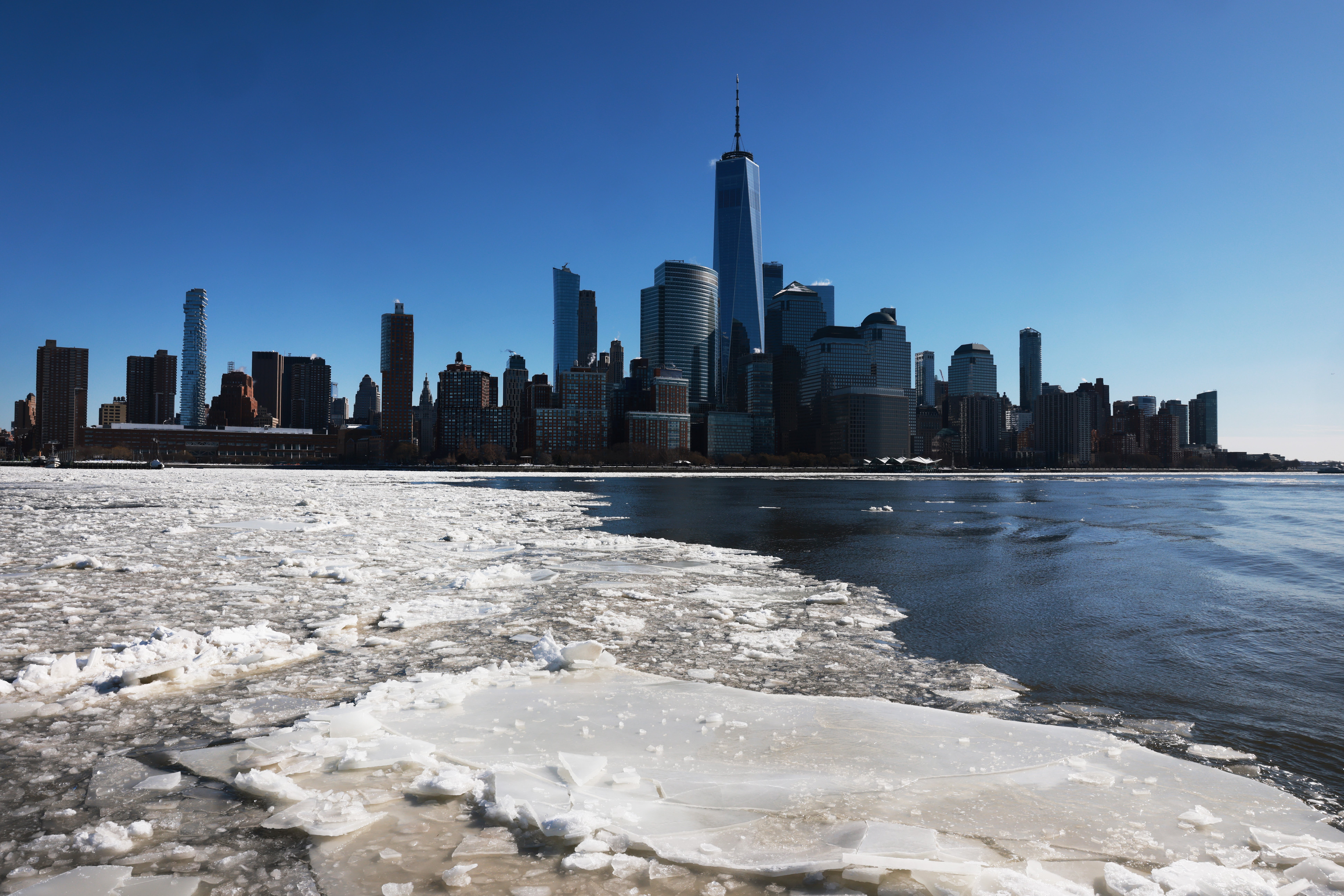
After over a week of temperatures below freezing, ice that spread across New York’s Hudson River was also visible on NASA satellites, according to AccuWeather.
It’s also unlikely that the Hudson would completely freeze over. However, it did happen once in 1888, according to AccuWeather.
Join our commenting forum
Join thought-provoking conversations, follow other Independent readers and see their replies
Comments
Bookmark popover
Removed from bookmarks