Measles cases confirmed amongst March for Life attendees last month in D.C.
Cases of the highly infectious and life-threatening illness have risen to historic levels, threatening the country’s longstanding elimination status
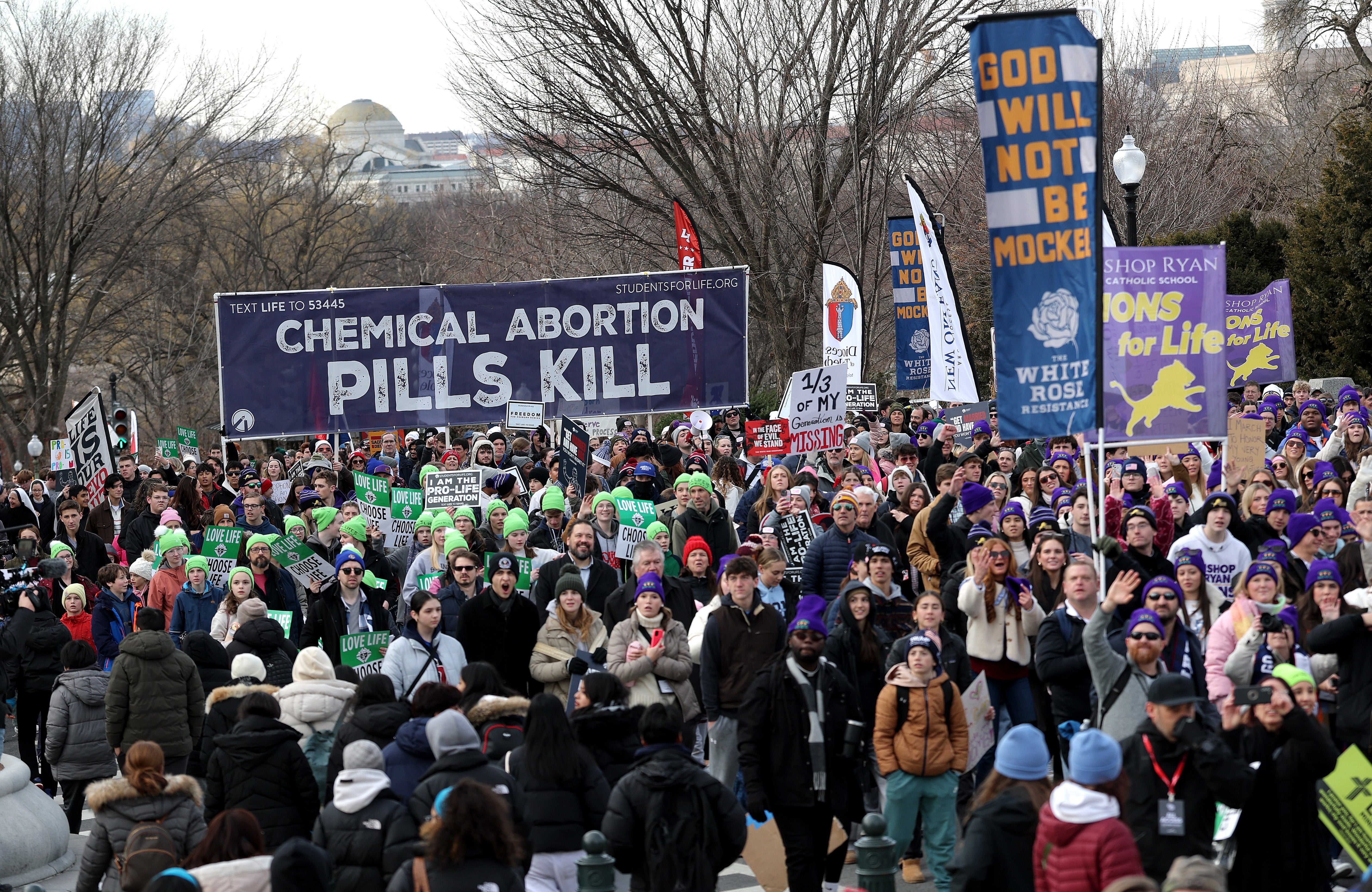
People who attended the annual March for Life rally in Washington, D.C., last month may have been exposed to measles, according to local health officials.
There were multiple confirmed cases of the highly infectious disease in and around the District at the time of the pro-life event, which thousands are believed to have attended.
People may have been exposed between January 21 and February 2 at Union Station, Ronald Reagan Washington National Airport, Basilica of the National Shrine of the Immaculate Conception and the Catholic University of America, according to the city’s health department.
“DC Health was notified of multiple confirmed cases of measles whose carriers visited multiple locations in the District while contagious,” authorities wrote in a release.
“DC Health is informing people who were at these locations that they may have been exposed.”

The warning comes as cases have surged in the District and across the country, ballooning to the highest level seen in decades and threatening America’s long-held elimination status, which was earned in 2000.
On Thursday, federal health officials reported 733 confirmed cases in states from coast to coast - but the biggest outbreak would grow even larger by Friday.
In South Carolina, where some children sickened with the virus have experienced life-threatening brain swelling, the state’s Department of Public Health said there were 44 new cases of measles, bringing the total up to 920.
State health officials cautioned people that they may have been exposed at a Target in Taylors, as well as a Boost Mobile store, a restaurant and the Social Security Administration in Spartanburg.
“There are currently 277 people in quarantine and eight in isolation. The latest end of quarantine for these is March 2,” the department wrote.
But even as infections have continued to impact the Palmetto state, state epidemiologist Dr. Linda Bell has stressed that the response has accelerated to meet the crisis.
Last month was the best month for measles vaccination during the outbreak, she said.
While measles can spread easily through the air, often leading to a fever, rash, vomiting and diarrhea; two doses of the measles, mumps and rubella vaccine offer 97 percent protection.
That’s how the U.S. eliminated the highly infectious measles virus 26 years ago.
However, experts have said rising vaccine hesitancy, uncertainty about basic facts related to the vaccine and misinformation have led to falling measles vaccination rates. Most of the cases over the past year have been in unvaccinated or partially vaccinated individuals.
Last week, Democratic South Carolina State Sen. Margie Bright Matthews filed a bill that could ban people from claiming religious exemptions for the vaccine.
Just days later, Dr. Mehmet Oz, the Centers for Medicare and Medicaid Services administrator, urged Americans to get their doses.
“Take the vaccine, please,” he pleaded. “We have a solution for our problem.”
His message comes just days after the Centers for Disease Control and Prevention’s top deputy said losing the elimination status would be the “cost of doing business” in a global economy.
Only six cases of measles have been reported among international visitors to the U.S. this year, according tot he agency.
Join our commenting forum
Join thought-provoking conversations, follow other Independent readers and see their replies
Comments
Bookmark popover
Removed from bookmarks